
Diesel particular filters or DPFs have become the solution of choice for many manufacturers to deal with soot and ash after burning diesel. In essence, they function as an exhaust filter that absorbs soot and stores it until it is processed during the DPF burn.
It is all about performance and we all know that any restriction is going to affect the efficiency of the engine. What can we do to fix the DPF? What is it and what is the best way to take care of it?
The DPF is able to be eliminated from the exhaust and software. This is a simple solution to every problem due to having a DPF. I will not explain the legalities of getting rid of the emission-related device. I am simply saying that is the most straightforward solution.
One advantage of the DPF is the fact that it helps reduce soot getting into the air. It is, according to some, a positive benefit for the environment. However, that’s a general and ambiguous statement. It is necessary that a DPF regenerate or remove the soot on a regular basis. The way to accomplish this is by making the DPF sufficiently hot to burn off the soot so that it can flow through the filter. The way to do this is that the ECU injects additional fuel to generate warmth in the filter to burn off. In this way, it consumes more fuel (not eco-friendly) Additionally, a portion of this additional fuel also gets into the sump of the engine, reducing the engine oil, which could be the cause of additional oil and filter changes.
Similar to how catalytic converters work were introduced and lead had to be removed from the fuel since it could harm the converter. Vehicles with DPFs require specific oils that are lower in sulfate and ash, sulfur, and phosphorus (low the saps). A wrong oil blocks the DPF and stops regeneration, making it imperative to replace the DPF. One of the most unattractive aspects of DPF is the cost to replace it.
Some argue that the oil required for the dpf will cause internal engine wear rates more than if ordinary oil was utilized. We’ll discuss that another day.
One of the biggest issues we face in DPFs is when a boost leak occurs. A boost leak can create additional soot in the exhaust, which can block the DPF quite quickly. After the leak has been repaired, then a DPF clean is likely to be required. You can conduct the DPF clean with the DPF still attached to the car. After the DPF cleaning is completed a regen can occur. In the event that it is necessary to conduct a regen that is forced, the engine oil is required after the regen. What is the reason, you should remember prior to when the fuel is injected in order to get the DPF hot enough to regen the engine, this fuel is going to dilute the engine oil.
What is a compelled regen? The act of forcibly imposing a regen is making use of a scanner tool to initiate a burning while your vehicle remains stationary. The majority of times, a regen that is forced will require higher temperatures and the regen tool monitors how much pressure is in the DPF when it is in use. It is necessary to use special tools for the forced regen therefore your typical mechanic might not be equipped to handle this. However, there is no requirement to work with a dealer. We have found that a lot of modern workshops the devices to do the forced regen.
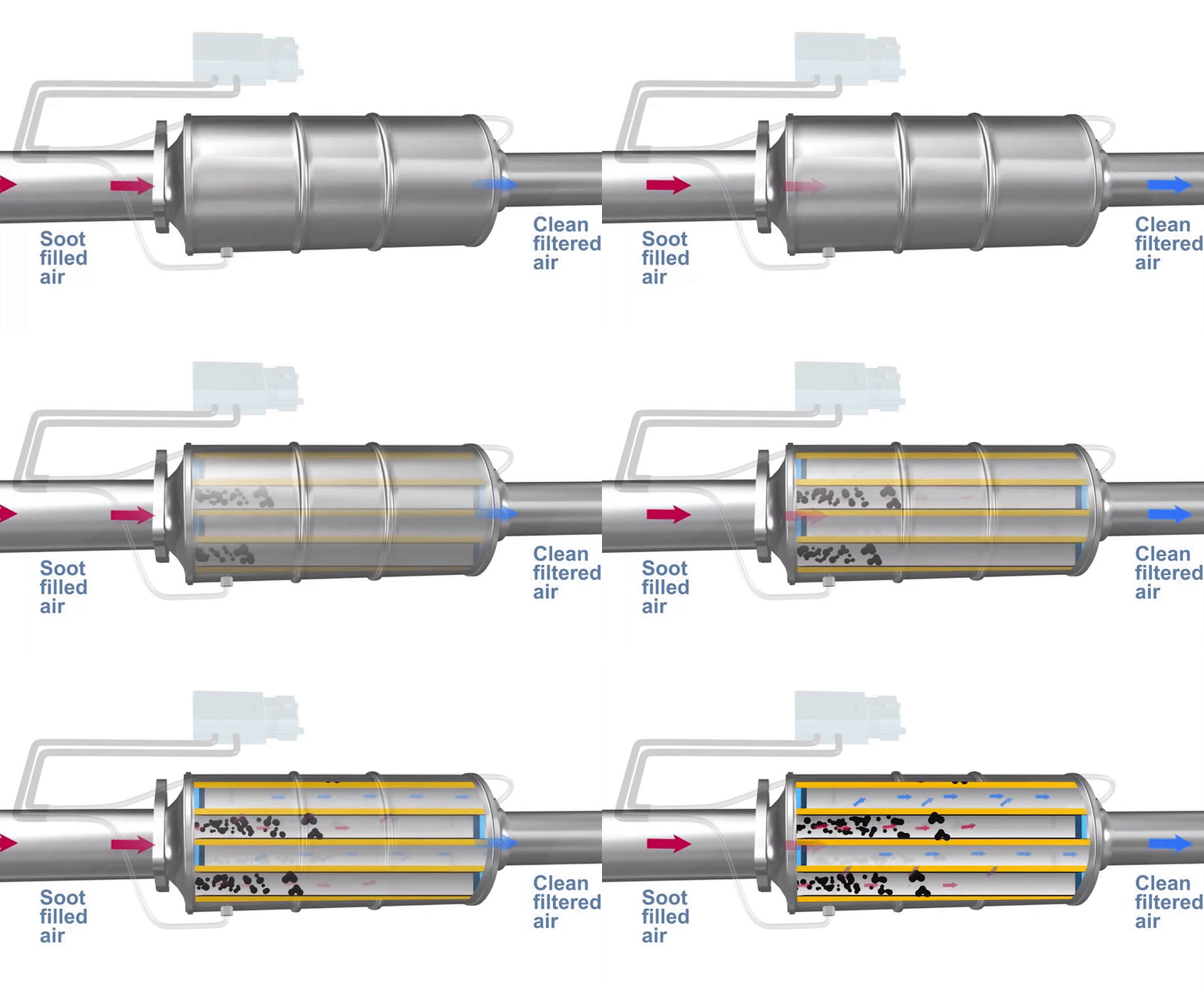
In more extreme circumstances, a forced regen may not be possible due to the extent of soot that is loaded. The next step in the process is to perform an on-car cleaning. Our car cleaning tool is a two-step process. The cleaner is injected into the DPF and it processes the soot for a specified duration. The cleaner is then removed from the system, leaving the DPF ready for a forced regen. The equipment for cleaning cars is even less common for an establishment to have. We are also able to assist with on-car DPF cleaning.