
You don’t need to spend much money on top-of-the-line equipment, but the investment in good equipment will make sure they last longer and provide you with a relaxing walk.
BOOTS
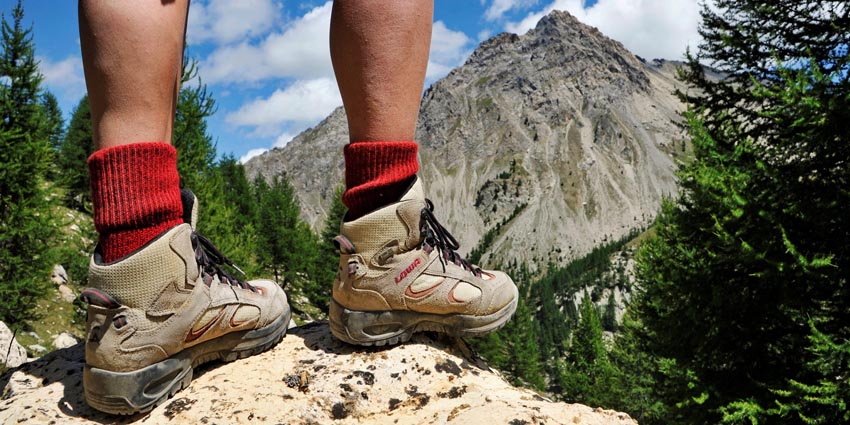
Hiking boots for you are your most important gear right after shell jackets. Consider the height of the boots, the materials also the weight.
Good boots are stronger and heavier and waterproof. However, leather boots can take longer to break in than others, so it’s not a good idea to take them on a long hike the very same day. Synthetic materials are lighter with a shorter break-in time and usually are less costly than leather. But, they will get worn faster.
Waterproof and water-resistant shoes reduce airflow, which could make your feet sweaty during the hot summer months. Breathable, quick-drying hiking shoes could be ideal for summer. The boots should not be too either loose or tight. The feet should not bump up against the front of the shoe as you walk. The heel should stay at a level. Wear your hiking socks to try on boots in the shop.
In general, low-cut and mid-cut, light trail shoes or boots are perfect for day hikes and short backpacking trips. If you plan to go on longer trips, the higher-cut mountaineering boots can support heavier loads and stop your ankle from rolling. If the trail has lots of debris, select high-cut or mid-cut boots. Try on a few different styles to ensure you’re wearing one that’s a good fit for your foot’s contour and feels comfortable. Walk around to get a feel for the fit.
CLOTHING
The right clothing for hiking is not always needed. It is important to be comfortable and warm or cool enough to be dry.
Have a blast while taking the trail. You should wear hiking socks that are typically made from synthetic materials or merino Wool. Do not wear cotton socks, which trap moisture. Layering is the key. For winter, opt for a breathable inner layer that absorbs sweat, an insulating layer like wool or fleece for staying warm, and additional outer layers to remain dry and block out the breeze.
In the summer, don layers that both wick sweat away while shielding you from the sun. Put an outer layer on your bag, even if you’re not wearing it. An outer layer should always be waterproof.
Wear long hiking pants year-round because they protect your legs from ticks. Zip-off pants let you change into shorts if you feel it’s too hot. Don’t forget sunglasses and a hat when you’re in need.
ACCESSORIES
Few accessories are needed to enjoy a relaxing time on the trails. This is one of the advantages of making hiking it is a pastime. The majority of people will carry a backpack with them, while certain hikers will bring trekking poles for stability.
TREKKING POLES
Awe-inspiring views of hikers from the top of Walking poles, also known as hiking poles, or hiking staffs, provide stability and can prevent accidents on the trails or when crossing streams. They also help balance the weight of a backpack and absorb impacts. They help make walking uphill and downhill a lot easier. Carbon fiber or aluminum poles are lightweight and long-lasting. Aluminum is stronger and heavier, whereas carbon fiber is light but costly.
Be sure that the poles you choose are comfortably sized to your height, and that the grips correspond perfectly to your hand’s size. These adjustable hiking poles are extremely adaptable and are able to be made shorter or longer for various kinds of terrain. Select poles that have steel or carbide tips if you want to have a grip, but you can use rubber covers to shield plants on the trail if you do not need an extra grip. Consider anti-shock poles when you are suffering from joint issues.