
Aquariums are fascinating miniature ecosystems that allow enthusiasts to create unique underwater worlds in the comfort of their own homes. One of the most intriguing aspects of aquarium keeping is the careful arrangement of different aquatic species. When it comes to combining shrimp with fish in your aquarium, there are several considerations to keep in mind to ensure a harmonious and thriving aquatic environment.
Compatibility Matters
Before introducing shrimp and fish into the same tank, it’s essential to research the compatibility of the species you plan to keep. Some fish species are known to be aggressive and may see shrimp as a tasty snack. Peaceful and non-predatory fish, such as guppies, tetras, or certain types of catfish, are usually better companions for shrimp. Be cautious when mixing large or territorial fish with shrimp, as this can lead to stress, injury, or even death for the shrimp. Always consult with your local aquarium store or do thorough online research to ensure the compatibility of your chosen species. Freshwater shrimp, in particular, can be vulnerable to certain aggressive fish species, so extra care should be taken when choosing tank mates.
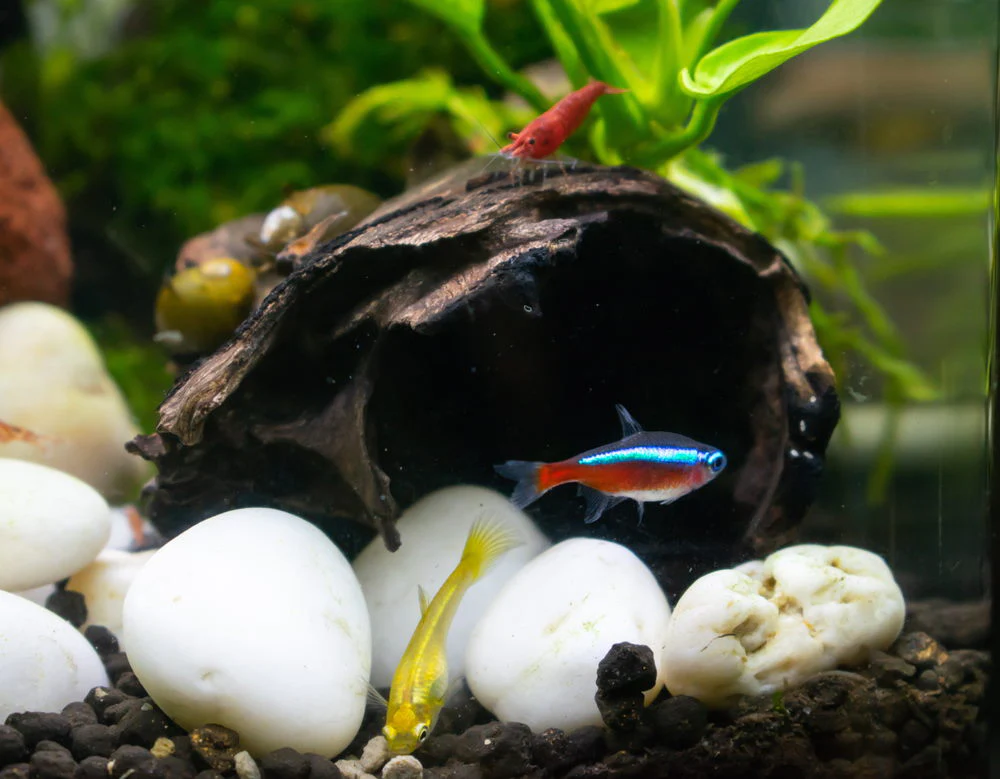
Tank Size and Hiding Places
The size of your aquarium plays a crucial role in determining the success of keeping shrimp and fish together. Shrimp need space to thrive, and overcrowding can lead to stress and aggression. It’s generally recommended to have at least a 10-gallon tank for a small community of shrimp and fish. Larger tanks provide more space for natural behaviors and reduce the risk of territorial disputes.
Furthermore, consider the provision of hiding places for your shrimp. Shrimp are vulnerable during molting, a process where they shed their exoskeleton to grow. During this time, they need safe spots to hide from potential predators, including fish. Decorate your aquarium with live plants, caves, or driftwood to create hiding spots for shrimp. These features not only serve as protection but also enhance the overall aesthetics of your aquatic environment.
Feeding and Water Parameters
Maintaining proper water quality is essential for the well-being of both shrimp and fish. Shrimp are particularly sensitive to fluctuations in water parameters, such as pH, temperature, and ammonia levels. Research the specific requirements of your chosen shrimp species and ensure that these conditions are met. Most shrimp thrive in slightly acidic to neutral pH levels and prefer temperatures between 72°F to 78°F.
When it comes to feeding, consider the dietary needs of both your shrimp and fish. Shrimp are typically scavengers and will feed on algae, detritus, and microorganisms that naturally occur in the aquarium. Supplement their diet with high-quality shrimp pellets or algae wafers. Be cautious not to overfeed, as uneaten food can lead to water quality issues.
Conclusion
In conclusion, the arrangement of aquarium shrimp with fish can create a captivating and dynamic aquatic display. However, success in maintaining these species together hinges on careful consideration of compatibility, tank size, hiding places, and water quality. By researching the specific needs of your chosen species and providing a suitable environment, you can create a thriving and harmonious underwater world that showcases the beauty of both shrimp and fish. Remember that each aquarium is unique, so regular observation and adjustments may be necessary to ensure the well-being of your aquatic inhabitants. With the right approach, you can enjoy the fascinating interplay between these diverse aquatic creatures in your own living room.